
Chapter 5 – Addressing a School Violence Situation
Managing Situations
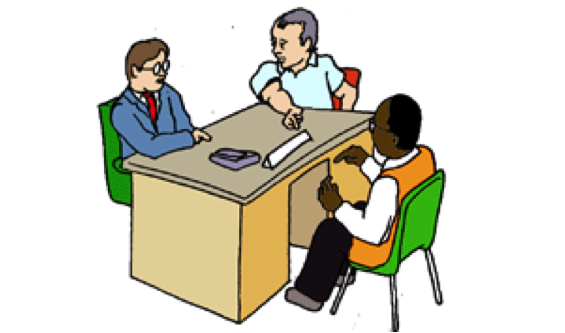
What if a youth makes a threat that puts him or her or others in imminent danger? (For instance, a weapon may be present.)
Treat this as an emergency. To diffuse the situation you should:
•Alert the administration to activate your school’s Incident Management Plan to contact:
–Police.
–School psychologist or counselor.
–Local mental health agencies or resources.
–Parents or guardians.
•Keep your distance. Try to create barriers between you and the person or weapon.
•Avoid aggressive body movements.
•Ask open-ended questions to keep the youth talking.
•Realize that you are not in control of the situation. Avoid projecting authority.
•Do NOT negotiate with the youth. You have nothing to negotiate with. Do not lie about helping.
•Time is your friend. Try to diffuse the situation until Police or a school psychologist arrives.
You should familiarize yourself with your school’s Incident Management Plan, asking four questions:
•What exactly is the “plan”?
•Is there a crisis team in place?
•What is my role in the plan likely to be?
•What happens after an incident?
Knowing the answer to each question before a crisis happens will better prepare you and your school to act effectively. For more information or training on handling violent or potentially violent situations, contact the New York State Police or your local law enforcement agencies and ask about programs for schools in your community.
What if a youth who has exhibited some of the red flags makes a threat that may be carried out but does not pose imminent danger?
•Do not dismiss the threat as idle talk.
•Immediately talk with the youth.
•If the youth refuses to talk, is argumentative, responds defensively, or continues to express violent or dangerous thoughts or plans, arrange for an immediate evaluation by a qualified mental health professional.
•Do not leave the youth alone.
•Contact:
–School administration.
–School psychologist or counselor.
–Parents or guardians.
–Local mental health agency.
–Police, if warranted.
What if I still have concerns about a youth?
Work with your school’s administration to obtain an examination by a qualified mental health professional whenever you are concerned about threats a youth makes. While there is no foolproof method of identifying potentially dangerous youths, it is best to bring your concerns to the attention of people who can professionally assess the risk for violence.
Immediate Response
- At the onset of a situation, the following things need to happen as close together as possible. Responding personnel will have to use individual judgment as to what they can and should do first, keeping in mind that their primary role is taking care of children at risk.
- Get students out of harm’s way. When possible, get in touch with the appropriate school authority or person on the crisis management team to determine whether evacuation or lockdown is the appropriate response. Teachers should make decisions about lockdown or evacuation on their own only in life-threatening situations, as specified in the school crisis management plan.
- Use doors that lock from the inside only in cases where lockdown is the safest option. In an active shooter situation, only evacuate if the location of the shooter is known and an exit is easily accessible to students, such as a window that can be opened or broken.
- Assess whether anyone is injured and the severity of injuries. Take appropriate measures.
- Call 9-1-1 or have someone call 9-1-1 in immediate life-threatening situations. Then alert school authorities or the crisis management team.
- If available, activate silent alarms to notify law enforcement.
- In the event a teacher cannot call or leave the classroom, send students for help only if absolutely necessary and if it does not put them in more danger than they would be in by evacuating or remaining with their class.
- Have designated personnel (the central administration or the crisis director) decide about the appropriate level of involvement of the crisis management team.
- Have appointed staff begin the calling tree before phone lines get overloaded. If lines are immediately overloaded, then get in touch with the designated alternative phone service provider.
- Remain with students until told by appropriate personnel what actions to take. Teachers and staff who are not with children should serve in designated roles and take assigned action.
Implementing the Crisis Management Plan
Depending on the nature of the emergency, either law enforcement or the fire department will be in charge of the incident.
- Secure all areas for student and staff safety until the police arrive.
- Be aware that the site may be a potential crime scene. Avoid unnecessarily tampering with or disturbing evidence. To the extent possible, leave all objects exactly as they are to protect evidence for law enforcement investigations. Discourage others from disturbing potential evidence.
- Tell emergency responders where the school staff command post is located.
- Direct arriving families to the designated place where they can receive information.
- Do not dismiss students to unknown care.
- In the case of a lockdown, use a sign-out sheet.
- Monitor which students have been picked up by their parents or guardians. In the case of evacuation, have a place where parents and/or guardians go to sign out their children.
- Never speculate. Be sure to understand the circumstances surrounding the situation before saying anything about it and before taking action. Follow all rules about repeating or giving out information.
- As appropriate, keep students informed about what is happening. Ensure that the same information is communicated to all students. If at all possible, update students in individual classrooms, not in a large group setting.
- As soon as possible, take a head count to determine which students, staff, and teachers are accounted for and which ones are not.
- To the extent possible, shield students from disturbing scenes. But do not disturb crime scene evidence.