Lesson 5
Learning Objectives:
By the end of this training, learners will:
- Understanding Diversity, Multi-cultural Environments, and Examining Personal Biases.
- Developing sensitivity to the experiences of specific student populations.
- Understanding how school climate and culture have an impact on student achievement and behavior.
- Participants will learn intervention and prevention strategies including how to interact with families.
NYC Well is also available to support you with your mental health needs. Trained counselors can provide confidential support 24 hours a day, 7 days a week, in more than 200 languages. Call 888-NYC-WELL, text “WELL” to 65173, or chat online at nyc.gov/nycwell.
In order to be considered bullying, the behavior must be aggressive and include:
- an imbalance of power: kids who bully use their power—such as physical strength, access to embarrassing information, or popularity—to control or harm others. Power imbalances can change over time and in different situations, even if they involve the same people.
- Repetition: bullying behaviors happen more than once or have the potential to happen more than once.
“75% of bullying is due to biases”
- Is the environment creating or reducing bullying?
- Bullying, Discrimination & Harassment impacts:
- Learning
- Achievement
- Attendance
- Dropout rates
The Effects of Bullying, Discrimination & Harassment
The effects can be internalized or externalized
Depression, anxiety, suicidal ideations etc
Acting out, bullying others, aggression, homicidal ideations
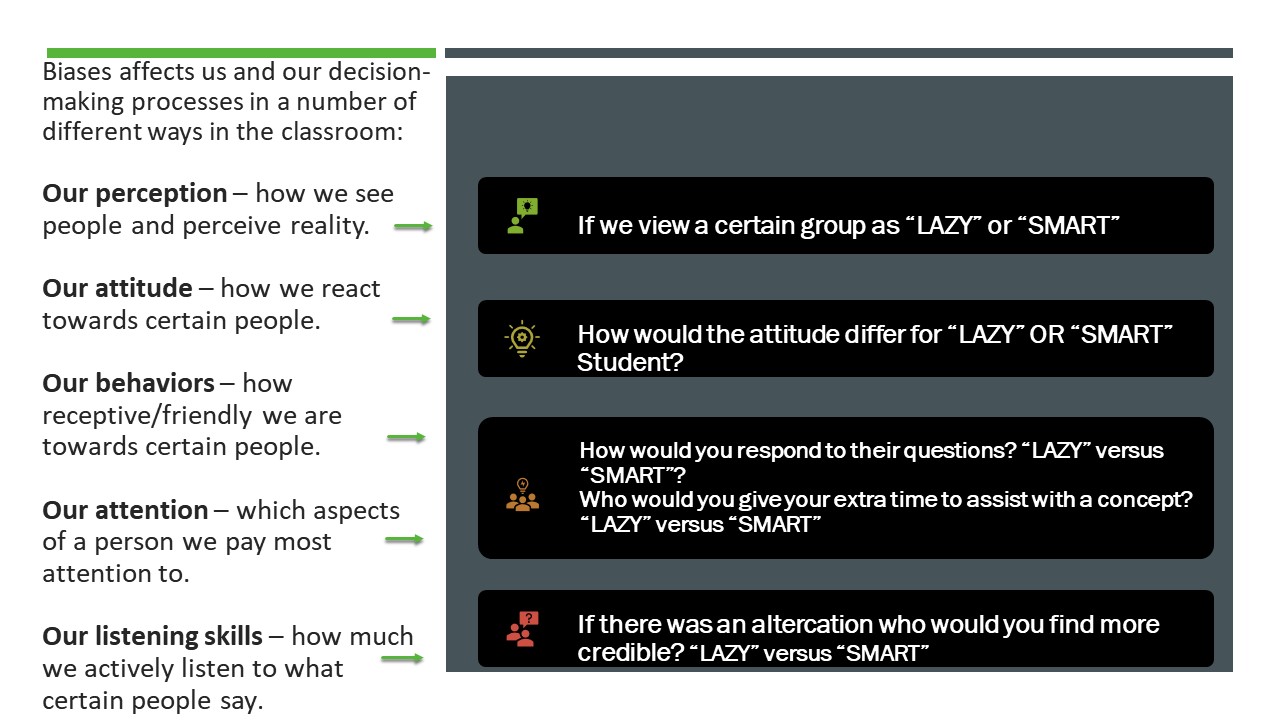
Biases affects us and our decision-making processes in a number of different ways in the classroom:
- Our perception – how we see people and perceive reality.
- Our attitude – how we react towards certain people.
- Our behaviors – how receptive/friendly we are towards certain people.
- Our attention – which aspects of a person we pay most attention to.
- Our listening skills – how much we actively listen to what certain people say.
* Conscious And Unconscious Thoughts Affects Our Responses And Behaviors
* Practice Can Change Thinking
* Being Aware Of Your Personal Biases Is The First Step To Creating An Inclusive Learning Environment
Multicultural and Diversity
FOX interview with children (20.34 minutes).
The following video may evoke emotional responses in some viewers, please use the mental health support information provided, if needed.