
CA9
Your suspicion that a child has been abused or maltreated may rest on pulling together several indicators or clusters of indicators.
DO NOT view indicators provided in your handouts in isolation – view the entire situation
At times indicators may seem to contradict themselves. For example:
- A six-year-old female was experiencing difficulty in sitting and walking. Mother also noticed her daughter’s vaginal area was swollen and irritated. However, a follow-up medical examination revealed that the child was suffering from a urinary tract infection due to poor hygiene practices.
Ask yourself, “What is ‘normal’ based on what I know of the child and/or the developmental stage and the child’s age?”
No two children respond to the same situation in the same manner.
Ask yourself: ”Is this explanation plausible? Are they repeating gossip or are they speaking from personal knowledge? What are they saying about the child’s condition or behavior?”
Abuse or maltreatment should never be assumed. Moreover, many abused or maltreated children may not show any of these indicators.
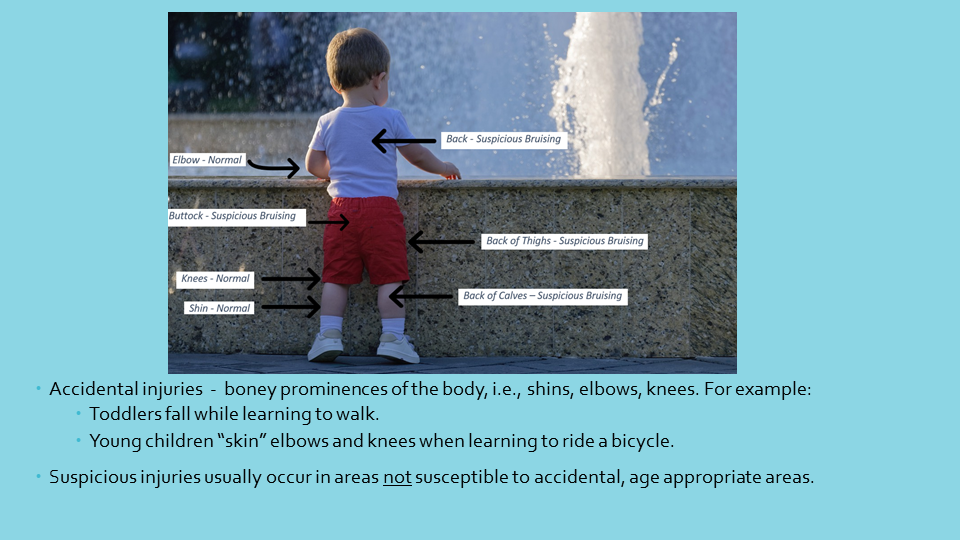
Accidental injuries – boney prominences of the body, i.e., shins, elbows, knees. For example:
- Toddlers fall while learning to walk.
- Young children “skin” elbows and knees when learning to ride a bicycle.
Suspicious injuries usually occur in areas not susceptible to accidental, age appropriate areas.