
Lesson 6

Debriefing
- How did that make you feel watching the children’s responses?
- How do you think their parents felt watching this program?
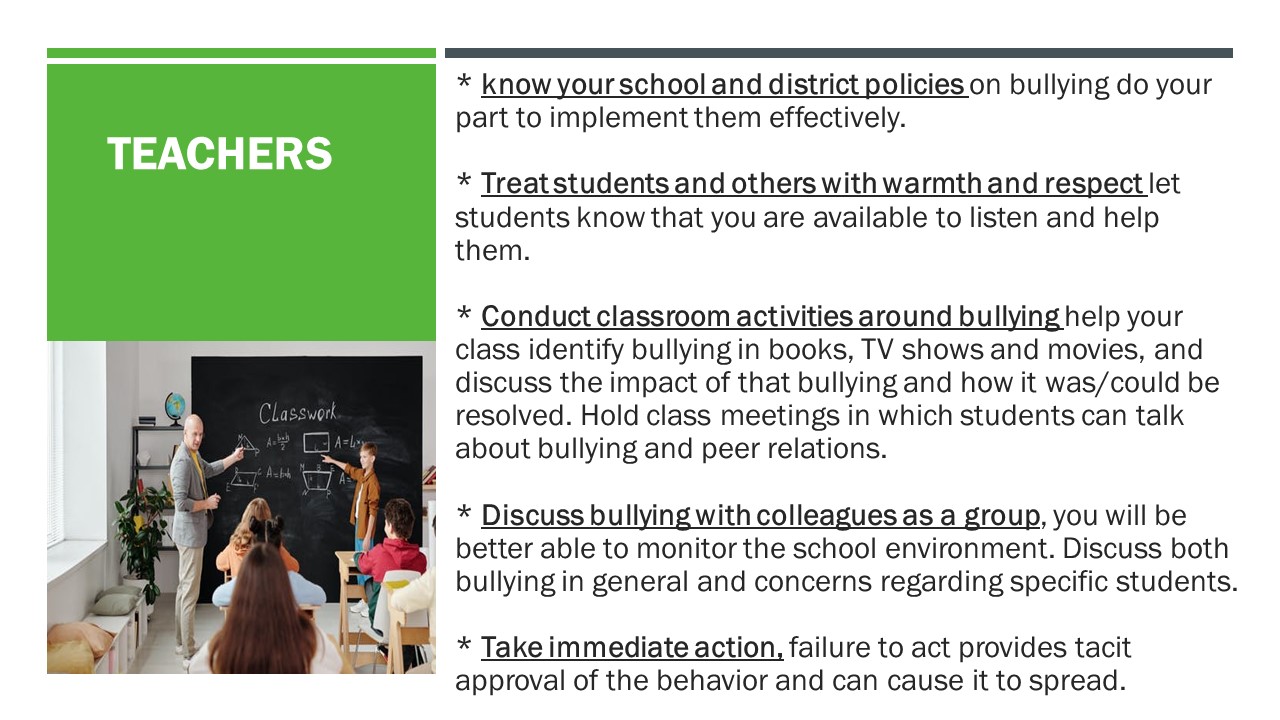
Teachers
- Know your school and district policies on bullying do your part to implement them effectively.
- Treat students and others with warmth and respect let students know that you are available to listen and help them.
- Conduct classroom activities around bullying help your class identify bullying in books, TV shows and movies, and discuss the impact of that bullying and how it was/could be resolved. Hold class meetings in which students can talk about bullying and peer relations.
- Discuss bullying with colleagues as a group, you will be better able to monitor the school environment. Discuss both bullying in general and concerns regarding specific students.
- Take immediate action, failure to act provides tacit approval of the behavior and can cause it to spread.
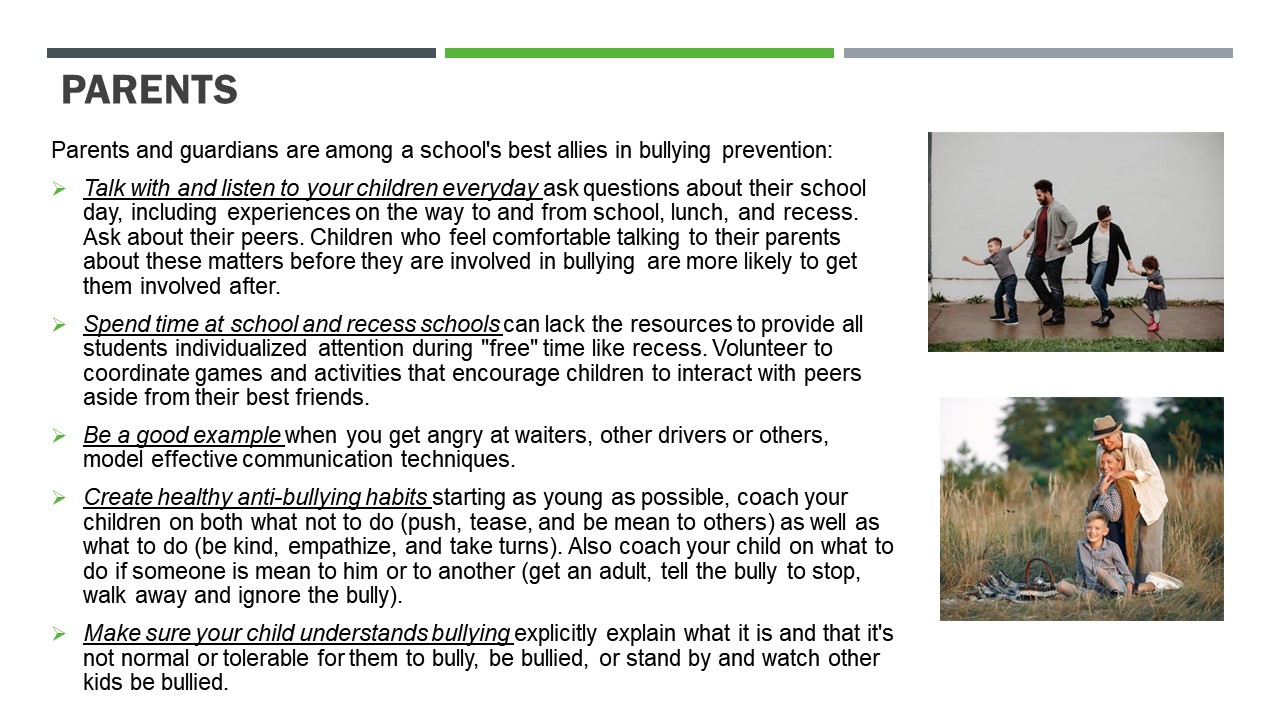
Parents
- Five Tips to Help Parents Prevent Bullying
- Parents and guardians are among a school’s best allies in bullying prevention:
- Talk with and listen to your children everyday ask questions about their school day, including experiences on the way to and from school, lunch, and recess. Ask about their peers. Children who feel comfortable talking to their parents about these matters before they are involved in bullying are more likely to get them involved after.
- Spend time at school and recess schools can lack the resources to provide all students individualized attention during “free” time like recess. Volunteer to coordinate games and activities that encourage children to interact with peers aside from their best friends.
- Be a good example when you get angry at waiters, other drivers or others, model effective communication techniques.
- Create healthy anti-bullying habits starting as young as possible, coach your children on both what not to do (push, tease, and be mean to others) as well as what to do (be kind, empathize, and take turns). Also coach your child on what to do if someone is mean to him or to another (get an adult, tell the bully to stop, walk away and ignore the bully).
- Make sure your child understands bullying explicitly explain what it is and that it’s not normal or tolerable for them to bully, be bullied, or stand by and watch other kids be bullied.
Principals/Administrators
- Tips to help School Administrators to prevent bullying
- Create a culture change – it takes time, but a few key steps to help principals get started:
- Practice what you preach don’t use your status as the school leader as the lever for change – “listen before talking and reflect before acting” to ensure your staff feel valued. Increases willingness to intervene -“connectedness” to the school and feel valued.
- Assess the extent of the problem survey students, staff and parents to find out how much and what type of bullying is going, as well as where and when, to target prevention efforts.
- Develop a school-wide code of conduct that reinforces school values and clearly defines unacceptable behavior and consequences. Empower bystanders — teachers and especially students — to help enforce it by training them to identify and respond to inappropriate behavior.
- Be visible and vigilant – increase adult supervision most bullying happens when adults are not present, in hallways, stairwells, cafeterias and locker rooms, as well as on buses and the way to and from school for students who walk.
- Conduct bullying prevention activities such as all-school assemblies, communications campaigns or creative arts contests highlighting school values to bring the community together and reinforce the message that bullying is wrong.